
Niwamanya Moses, Miria, and Nabaasa Bless are three siblings who all, with the help of our home, were able to receive an education, counseling, care, and protection at a time in their life when they felt helpless.
Background
Niwamanya Moses, Miria, and Nabaasa Bless are siblings who also have hearing impairments; Their family, clan, and community have looked at this fact, and their disabilities, as a curse. The judgments of others created a sense of low self-esteem in the children. Their father also abandoned their family and remarried. Currently, only their mother is responsible for the day-to-day living of the household. Moses’ family’s survival came from scaring away birds from other people’s rice fields.
How three children ended up in the care of Nyakibale
The paternal grandmother, who had an idea about the services for the deaf available at Nyakibale Lower Deaf Unit, decided to bring the three children to our home.
When Niwamanya Moses, Miria, and Nabaasa Bless arrived at our home, they were empty-handed—no supplies or personal care items to keep with them after admission. They had nothing to use at school to provide us with a supplies challenge to care for such children though we did our best.
Moses and his two sisters walked on foot for approximately 58 kilometers to reach the school premises. We admitted the three children but were initially unable to raise school fees since the mother had no income source. Moses once stated that they had jackfruit as their daily meal.
The impact of donor support
When the school administrator received in-kind (physical gift) donations of clothes, blankets, soap, and other educational materials, part of these donations were given to the three siblings. In addition, our home provided the three with counseling sessions to improve their self-esteem and confidence.
These in-kind donations blessed Moses’ family so much as their mother had been struggling to find work. As a result, their mother grew more confident and started engaging in casual labor as an income-generating activity for her family. She would go to the Kiboga district to dig and get paid–however, a prolonged drought hit that season, and there were no harvests. As a result, she would often come back home disappointed, empty-handed, and poorer. Our home’s counseling services helped her to stay motivated despite the hardships, while our home helped ease some of their financial burdens through the in-kind donation gifts—and services.
While the three siblings were at our home, a joint home visit was conducted with the administrator, social worker, counselor, and probation officer. We provided more counseling and psychosocial support during that visit to help the family.
Summary
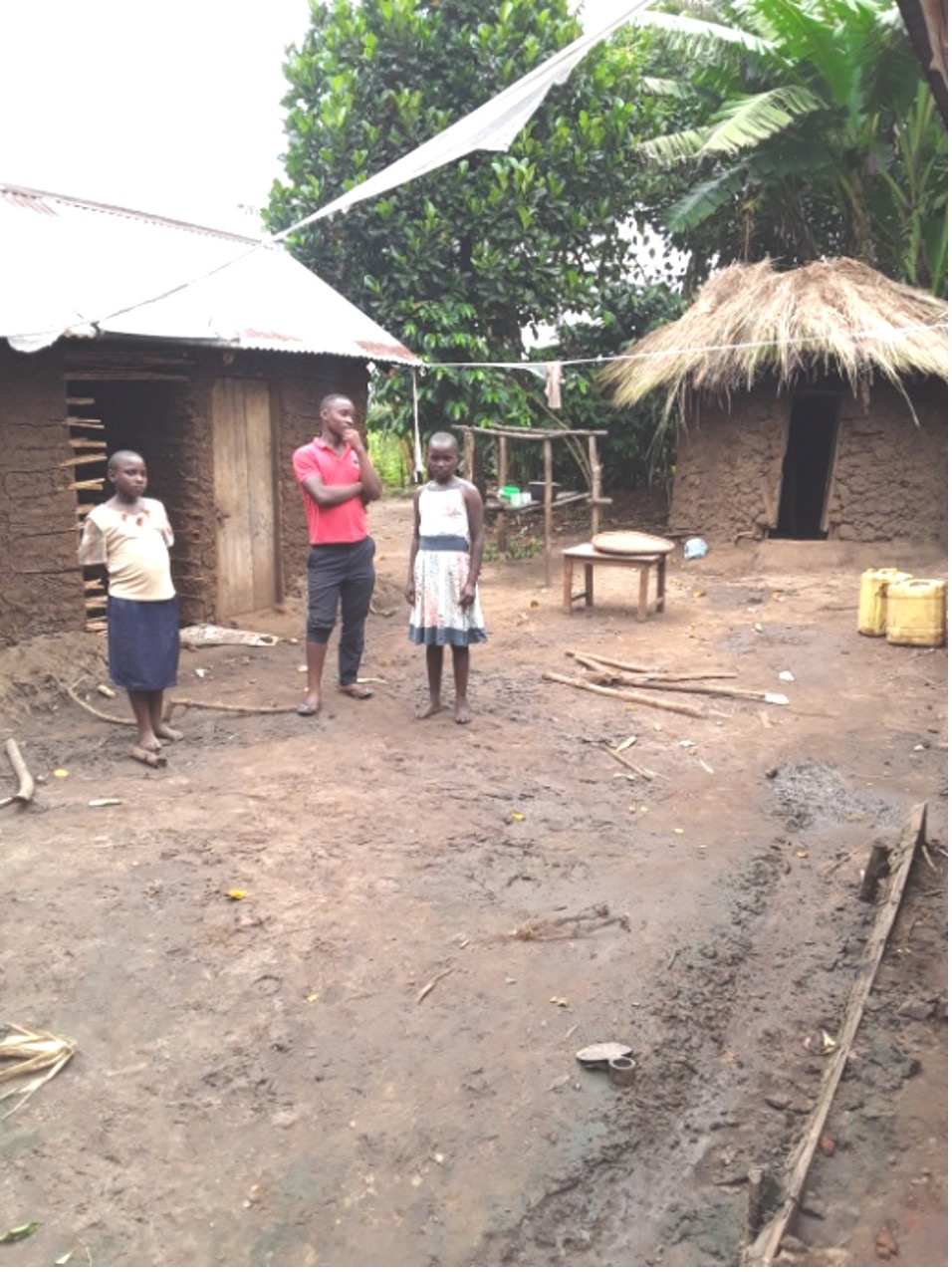
At the time of enrollment at Nyakibale Lower Deaf Unit, Moses and his family lived in the grass-thatched house. As a result of capacity building and the vocational course completed by Moses, a new iron sheet-roofed home is under construction, and the household’s living standards are improving. As a result, the children and the mother have more hope, confidence, and purpose.
With your gift, Nyakibale Lower Deaf Unit can help more kids and sustain families by providing essential support for the most vulnerable.
Help keep a family together.
Rather than placing vulnerable children or children with disabilities in an orphanage, you support families struggling to stay together with awareness, education, and resources that lead to self-sufficiency.
[give_form id=”120″]